- Thesis
- The opening range broke low on rising volume, price is under VWAP and dealer gamma is negative.
- Wrong above
- 763.40, the opening range high
- Credit
- 2.90 a share, $580 for 2 contracts
- Maximum loss
- $420, sized from this number
- Take profit
- Buy back at 1.45, half the credit
- Stop
- Buy back at 4.35
- Time stop
- Out by 14:00 ET, flat by 15:30 ET
Many agents read. One thread trades.
A private options desk on the New York clock. Read-only agents scout and argue; one thread holds the ledger and writes every exit before it enters.
Sign inThe desk keeps New York hours: it opens at 08:30 ET and closes the books at 16:15 ET, Monday to Friday.
How the day runs
- Calendar
- CPI at 08:30, no earnings
- Brief
- Pushed at 09:15
08:30 to 09:30. First the desk reads the morning.
- For
- Range broke low on volume
- Against
- Prior day low 0.6% below
- Wrong above
- 763.40
From 09:30. A scout brings the case for and against.
- Stop
- 4.35
- Take profit
- 1.45
- Time stop
- 14:00 ET
Before any order. The exit is written first.
- Out
- 1.45 at 11:52 ET
- Result
- +$290 on $420 at risk
- Journal
- Fill, exit and lesson logged
By 15:30. The book is flat, the journal written.
The workstation
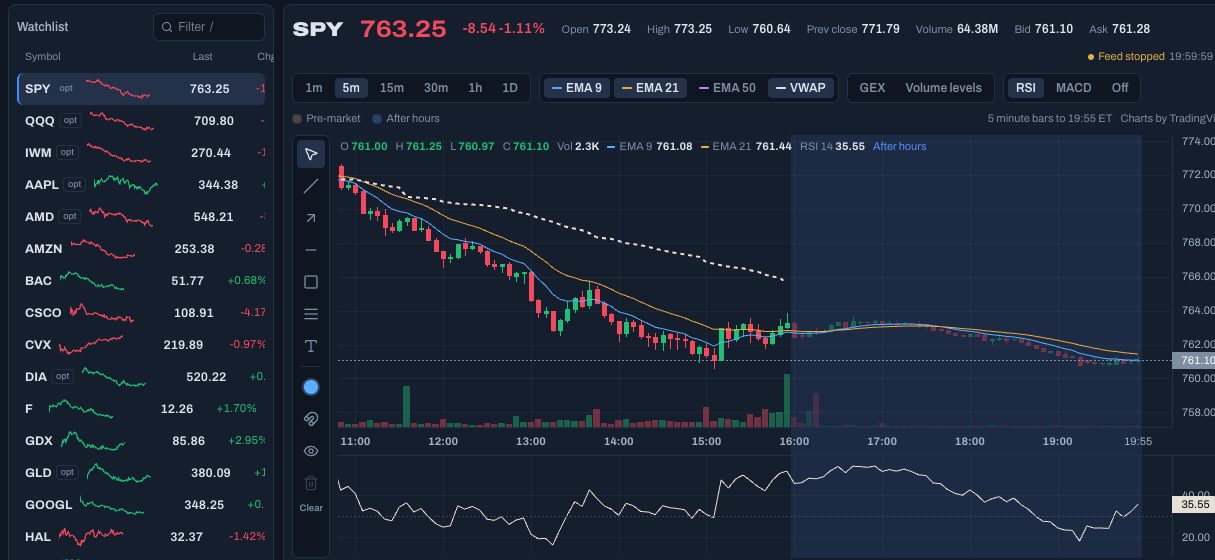
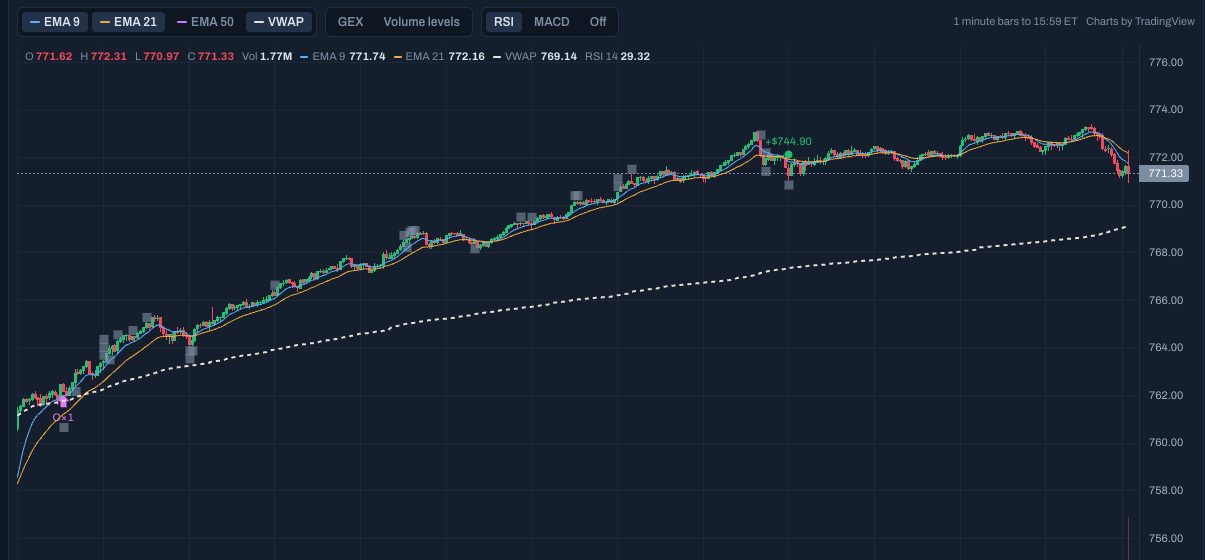
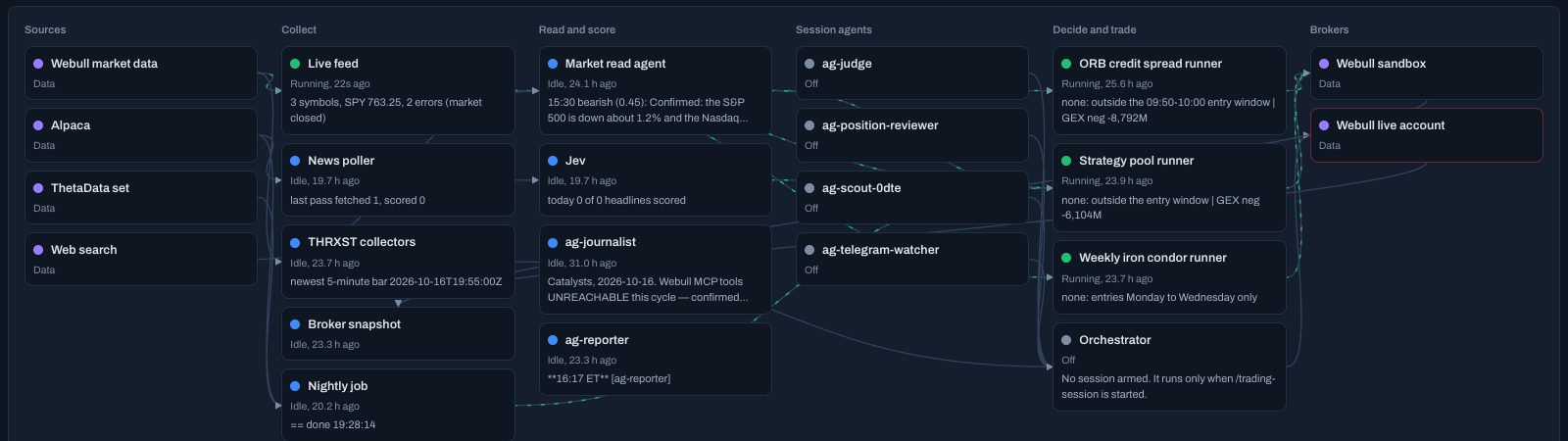
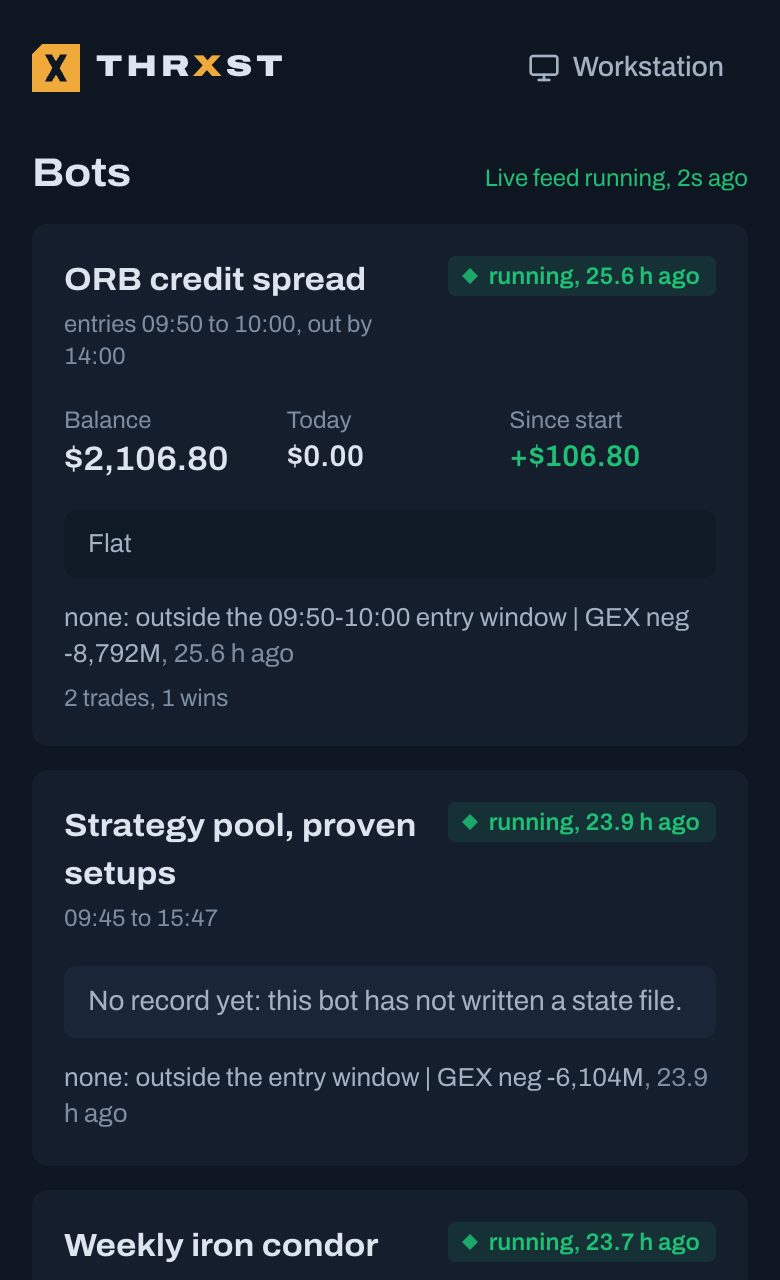
Trade is the desk itself: the chart, the option chain, positions, orders and the day's journal, on the live account or the sandbox.
The rules
-
Every agent in the fleet is read-only by construction. Exactly one thread previews, places and cancels, and it holds the ledger every limit is counted against.
-
Each thesis is one sentence: the direction, the evidence, and the price that ends it. If the scout's case against it is stronger, the desk passes.
-
Stop, first target, runner and a time stop are written before the entry. Every level comes from the thesis or the premium, never from a number that happened to be on the screen.
-
A script turns the maximum dollar loss into a number of contracts. Its answer is final; nobody rounds up.
-
Before every preview the desk pulls its own quote: a live bid with size, a spread it can afford and real volume. A number from an agent is a lead, not a fact.
-
More than fifteen percent above the intended entry and the trade is gone. The quote is checked again just before the order.
-
Anything expiring today is closed by half past three, without exception. Stops never wait for a review.
-
Risk limits change deliberately, on journal evidence, with the reasoning written beside them. Never while a candidate is on the screen.